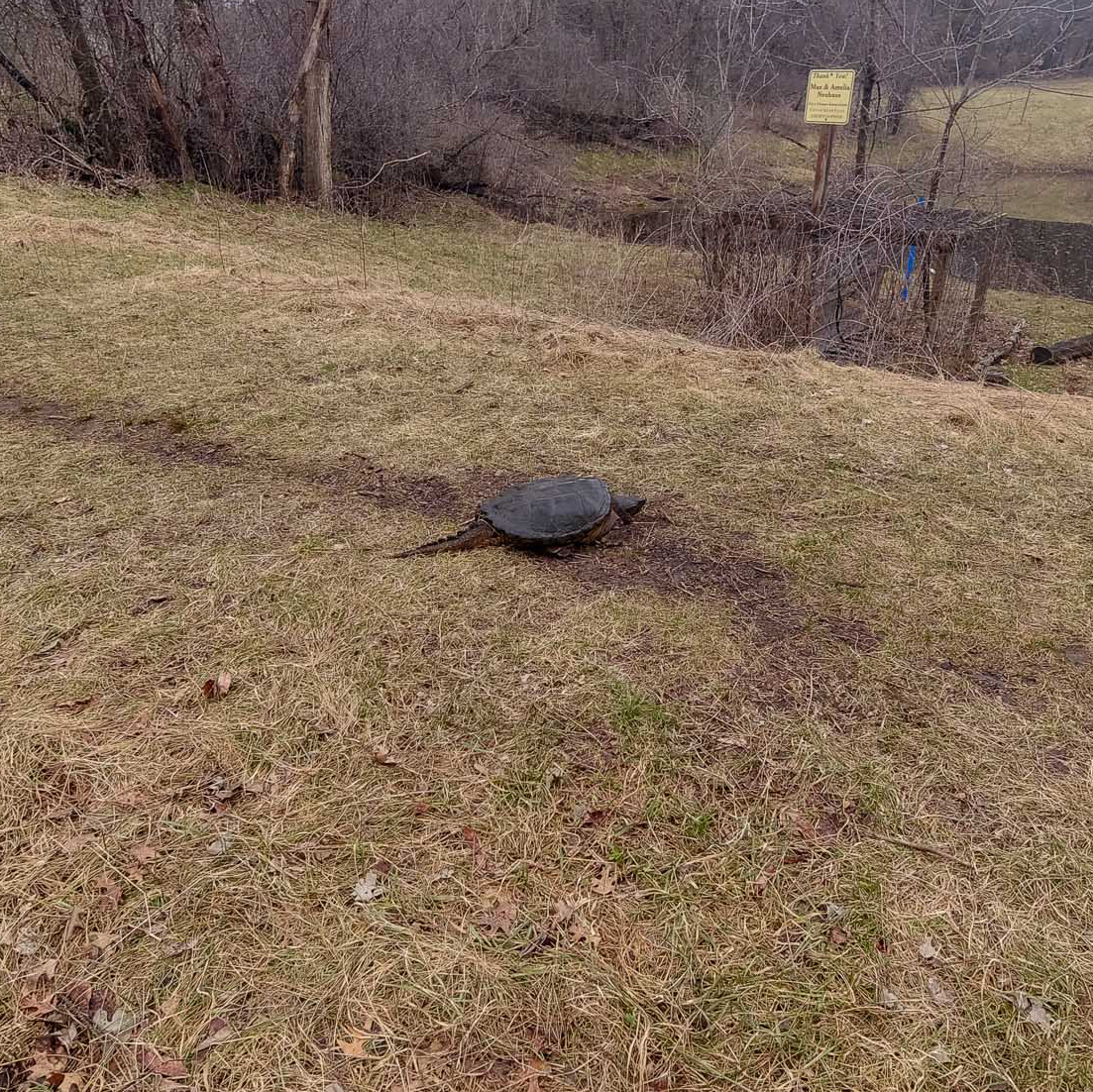
One of the unexpected joys of walking along the Kinnickinnic River is the chance to encounter local wildlife—and on a recent walk from Freeman House, we came across one of the area’s most fascinating residents: a snapping turtle.
Slow-moving but prehistoric in appearance, this turtle was making its way across the trail near the water’s edge, likely traveling between the river and a nearby nesting area.
What Kind of Turtle Is This?
This is a Common Snapping Turtle, native to Wisconsin and commonly found in rivers, ponds, and wetlands like those along the Kinni.
They’re easy to recognize by:
A dark, rugged shell that looks almost jagged
A long tail (often nearly as long as the shell)
A low, heavy body rather than a tall, rounded shell
A generally “dinosaur-like” appearance
Despite how striking they look, snapping turtles are a normal and important part of the local ecosystem.
Why You Might See One
Snapping turtles spend most of their time in the water, but in spring and early summer, they often travel on land to:
Find nesting spots
Move between bodies of water
Explore new habitat
That’s why you might spot one along trails, near paths, or even crossing open ground.
What To Do If You See One
If you come across a snapping turtle on your walk, the best approach is simple:
1. Give It Space
Stay at least several feet away. Snapping turtles can move quickly if they feel threatened.
2. Don’t Try to Touch or Move It
Even if it seems slow or calm, a snapping turtle can defend itself with a powerful bite. It’s best to let it continue on its way.
3. Let It Cross
If it’s on a trail, just pause and give it time. They’re usually focused on getting somewhere and will move along shortly.
4. Keep Pets and Kids Back
If you’re walking with a dog or children, keep a safe distance and avoid approaching.
A Memorable Part of the Walk
Encounters like this are part of what makes the walk along the Kinni so special. You’re not just following a scenic route—you’re moving through a living landscape.
Most days, you’ll see flowing water, quiet trails, and maybe a few birds overhead. And occasionally, if you’re lucky, you’ll come across something a little more memorable.